ADA Certified Portable Bathroom Rental: When Ease Of Access Identification Issues
Portable toilet preparation has a means of getting treated like a final task. Someone counts expected guests or workers, books a couple of devices, picks a delivery home window, and proceeds to car park, allows, or wedding catering. That approach develops genuine troubles when access is treated as a second thought, since an ADA compliant mobile toilet is not simply a bigger device dropped someplace nearby. It has to be correctly given, correctly placed, and correctly identified.
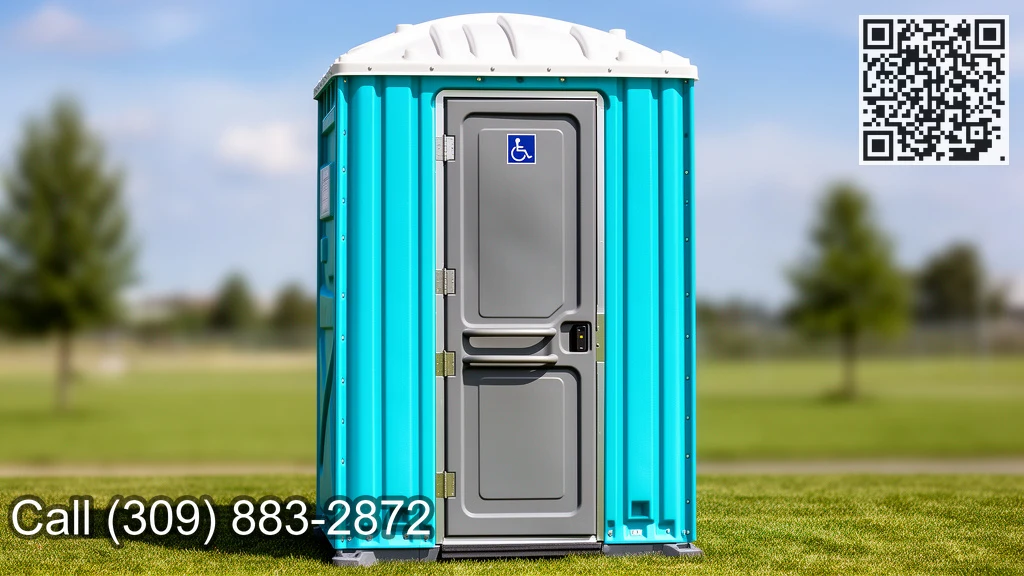
That last item, recognition, gets ignored more frequently than it should. People often tend to concentrate on whether an ADA obtainable mobile toilet is literally existing. The harder question is whether a person who requires it can in fact discover it, reach it, and utilize it without confusion or included concern. Under the 2010 ADA Standards for Accessible Design, accessible mobile toilet systems must be understood the International Symbol of Availability. That is not an aesthetic information. It belongs to just how availability comes to be usable in actual life.
If you have ever enjoyed a crowded occasion open its gates, or seen a jobsite team get here prior to daylight, you recognize exactly how quick small blunders end up being big ones. An unit can practically be on site and still stop working individuals it was suggested to offer if no person can easily recognize it, if it sits off the accessible route, or if the configuration neglects the technological demands that make the area practical inside the door.
The distinction between existing and usable
There is a useful difference between stating, "We rented an ada mobile bathroom," and ensuring an obtainable individual can independently use it.
People trying to find an ada handicap easily accessible portable toilet ought to not have to ask three employee where it is. They must not have to inspect every system in a row due to the fact that none are noted. They must not be resulted in a device placed on a hard to reach surface area or obstructed by a crowd-control fencing. Identification issues due to the fact that it shortens unpredictability. It safeguards dignity. It lowers preventable dependancy on team or companions.
That point becomes particularly important at temporary events, where portable toilets are typically mounted in clusters. The Gain access to Board's analysis makes clear that for collections of mobile single-user commode devices, at the very least 5 percent of the systems in each cluster need to be accessible, and this uses even at temporary events. The mathematics matters, yet so does exposure. If the obtainable unit is hidden in a lengthy line of identical-looking restrooms without obvious marking, conformity theoretically can feel like disobedience on the ground.
I have seen planning teams assume that due to the fact that they bought one larger device, they had resolved the issue. After that shipment day comes, the units are organized securely to make the most of space, the available one winds up at the far side behind a barrier, and nobody notices until participants get here. That is how access failings usually take place, not with open refusal, however via casual inattention.
What the ADA needs for portable restroom accessibility
The legal structure here is not mysterious, even if people occasionally treat it this way. The managing government requirement in the USA is the 2010 ADA Specifications for Accessible Design, as translated by the Accessibility Board and the Department of Justice.
For basic portable commode rentals, easily accessible devices are needed in the scenarios covered by those requirements. The obtainable device must be understood the International Sign of Ease Of Access. It additionally must have an easily accessible route and entrance. If ramps or touchdowns are needed, those aspects have to abide by ADA technological needs as well. Inside the unit, the toilet room should fulfill appropriate technological requirements involving fixture clearances, turning space, door navigating clearances, and pertinent grab bar and water storage room clearance rules.
That is why the expression ada certified portable washroom needs to mean more than "roomy enough." Real compliance relies on a package of problems working together. Size alone does not settle it. Positioning alone does not resolve it. Signage alone does not settle it. The mix does.
There is likewise an essential distinction that occasionally develops complication. The requirements have dealt with particular construction-site mobile toilets used exclusively by building employees in different ways from general portable toilet leasings. People sometimes find out about that limited context and think it excuses easily accessible provision all over. It does not. If you are taking care of an ada portable commode service for public usage or general use outside that slim context, you require to assess the accessible-unit demand under the suitable ADA regulations, not count on an exemption that does not fit the situation.
Why recognition is more than a sticker on the door
It is very easy to ignore the sensible function of recognition since it seems so simple. Put the sign on the unit and go on. But in actual site https://johnnyekmt070.moderncairn.com/posts/ada-certified-portable-restrooms-and-the-role-of-entryway-clearances conditions, identification is what attaches the lawful need to the individual experience.
A marked ada certified mobile commode tells people, rapidly and without settlement, which system is intended to fulfill access requirements. That can matter in a remarkably variety of minutes. A visitor using a movement gadget might be saving power and can not afford unneeded detours. A relative aiding an older adult may need to make a quick decision in a jampacked location. A person arriving at sunset, in poor climate, or throughout a noisy occasion needs a clear visual sign, not vague verbal directions.
Identification additionally assists occasion team and site supervisors do their tasks better. When the available system is plainly marked, groups can protect it from being misused as a storage space area, being hidden behind momentary equipment, or becoming the first system individuals enhance, wrap, or partially block for branding. Those points happen regularly than several planners realize.
The identification need has one more effect that is much less talked about but equally as vital. It requires coordinators to recognize the available system as a distinctive part of the plan. As soon as an unit has to be visibly recognized, it is more difficult to make believe accessibility was covered by crash. It comes to be a purposeful preparation option, which usually enhances placement and upkeep decisions too.
The usual failure points are seldom dramatic
Most access failures with mobile restrooms are common and preventable.
Sometimes the trouble starts at purchasing. An occupant requests for "one handicap device" without reviewing the design of the website, the dimension of the bathroom clusters, or whether each cluster requires its own available provision based upon the suitable scoping. Often the vendor provides the proper kind of unit, yet the website group positions it where the delivery truck can drop it most quickly instead of where users can approach it on an obtainable route.
Sometimes the device exists and identified, but the path to it is not really available. The ADA standards require an easily accessible path and entry, and if a ramp or touchdown is needed, those aspects need to likewise abide by the ADA technological requirements. This is where accessibility frequently breaks down in temporary settings. The bathroom itself gets attention, yet the path to the door does not. An individual can not utilize a certified unit they can not reach.
Inside the unit, technical needs matter equally as much. Fixture clearances, turning area, door maneuvering clearances, and applicable grab bar and water storage room clearance policies are not documentation details. They are what make transfer, movement, and independent usage possible. If a mobile bathroom is identified or marketed as accessible however does not satisfy those technical problems, the label creates incorrect confidence.
Temporary occasions are worthy of permanent-level care
One of the most persistent myths in occasion preparation is that momentary configurations can be dealt with casually due to the fact that they are temporary. The legislation does not work by doing this, and neither does excellent procedures method. The Accessibility Board's interpretation particularly notes that the accessible-unit demand applies even at short-term events when you have clusters of mobile single-user bathroom units.
This issues for fairs, festivals, outdoor solutions, college functions, pop-up neighborhood occasions, sports satisfies, and any other situation where mobile restrooms are installed for public use. Short-lived occasions are typically harder atmospheres for access than permanent buildings. Wayfinding is less acquainted. Surfaces can be unequal. Lights may be even worse. Groups can develop pinch points. Staffing can transform hour by hour. All of that makes clear recognition and available positioning more important, not less.
I have watched guests reach a short-lived occasion with total confidence in the program and no confidence in the restroom setup, since they have been disappointed prior to. That suspect is gained over time. When available toilets are simple to identify and get to, it transforms just how welcoming the site really feels almost quickly. Individuals discover when accessibility was considered in advance.
The collection rule adjustments exactly how you count
The 5 percent regulation for clusters of portable single-user toilet devices is one of those needs that sounds simple till a person begins laying out the site. It is not enough to assume only in total systems throughout the entire building if washrooms are split right into separate clusters. The regulation puts on each cluster.
That impacts huge grounds in a big means. A planner may think one centrally situated ada compliant easily accessible mobile toilet suffices since the complete number of devices throughout the venue seems small. Yet if restrooms are spread amongst several areas, each collection has to be examined by itself. That is the type of information that individuals miss out on when they deal with bathroom service as an asset purchase instead of an accessibility issue.
It additionally strengthens the relevance of identification. When you have available devices in the appropriate clusters, individuals still require to recognize which systems they are. The symbol is what shuts the loophole in between compliant allotment and functional usability.
Where positioning choices go wrong
A surprising number of accessibility problems originate from convenience-based placement. Groups usually select the spot that best suits deliveries, waste solution accessibility, or crowd flow from the coordinator's perspective. Those are reputable worries, but they can not override the need for an available route and entrance.
A few repeating problem areas deserve interest:
- placing the available unit at the edge of a collection where the path is harsh or obstructed
- setting it behind momentary fence, staging, or vendor equipment
- relying on a makeshift ramp or touchdown without thinking about ADA technical compliance
- treating the device as obtainable because it is larger, even when the path or entryway fails
- forgetting noticeable identification with the International Icon of Accessibility
That checklist might seem standard, yet these are specifically the kinds of issues that develop actual problems and genuine barriers. None are exotic. They are common control mistakes.
The language individuals use can conceal the real question
In the rental market, terms like ada portable restroom, ada compliant portable bathrooms, ada-compliant portable restroom, and ada-compliant portable toilet often get made use of loosely. That is understandable in table talk, however it can obscure important distinctions.
The genuine concern is not whether the product name seems best. The actual question is whether the system, in its mounted problem, satisfies the applicable needs. An ADA certified portable bathroom is not specified by a sales label. It is defined by satisfying the ease of access requirements that apply to portable units, consisting of identification, route, entryway, and indoor technological criteria.
This is why knowledgeable planners promote specifics rather than depending on shorthand. If somebody states, "We have an ada portable commode on order," the follow-up should be, "Where will it be positioned, just how will users reach it, and is it clearly recognized?" Those are not fussy information. They are the difference between gain access to and inconvenience.
A much better way to evaluate an ADA portable toilet service before opening
The simplest repairs take place before the website goes real-time. As soon as crowds get here, transforming restroom format is harder, slower, and often more expensive.
A practical pre-opening review can be short:
- Confirm that each washroom collection has actually the required obtainable provision.
- Verify that the obtainable system is understood the International Symbol of Accessibility.
- Check the path to the device and the entrance, including any ramp or touchdown that is needed.
- Make certain nearby barricades, branding, devices, or storage do not conflict with access.
- Walk the course as a customer would certainly, not as the delivery team did.
That last action matters greater than people think. A plan that looks penalty theoretically can fall short instantly when you come close to the device from the parking lot, gateway, or pedestrian path actually used by guests.
Accessibility recognition influences dignity as high as compliance
There is a human side to this subject that legal summaries typically miss. Recognition is not just for examiners or supervisors. It offers the person who should not need to reveal their needs in order to utilize a restroom.
When an ada easily accessible portable washroom is clearly significant, a customer can find it independently. That freedom is simple to consider given if you have actually never ever needed to consider whether requesting directions will certainly attract attention, price time, or force an uneasy communication. For lots of people, the problem is not only physical. It is social. Good recognition lowers both burdens at once.
That is why I often tend to press back when somebody treats the icon as optional or "great to have." The demand exists due to the fact that accessibility has to show up to be functional. If the easily accessible system blends right into the row without recognition, some customers may eventually find it. That is not the criterion we ought to be aiming for. The factor is not ultimate exploration. The factor is equivalent, straightforward access.
The wider conformity climate is not obtaining looser
Even though this write-up is focused on portable washrooms, it is worth keeping in mind that ADA conformity is being enforced in a more comprehensive setting throughout sectors. Recent federal advice activity around state and city government internet and mobile accessibility deadlines mirrors the fact that availability responsibilities remain active and noticeable. That wider environment ought to inform coordinators and website operators something essential: availability is not an old box to inspect and neglect. It is an ongoing functional responsibility.
Portable cleanliness becomes part of that duty. It may not obtain the same focus as websites, entries, or seating strategies, yet it impacts genuine individuals just as directly. In some setups, more straight. A failed toilet plan can thwart a person's whole ability to go to an occasion, remain at a website, or participate comfortably.
What cautious organizers do differently
The organizations that handle this well usually share one behavior: they quit treating the ada compliant mobile toilet as a different add-on and start treating it as component of the full user journey.
They ask where the easily accessible route begins, not simply where the unit sits. They think about whether the accessible bathroom is put where individuals will normally search for it. They verify that recognition is visible. They think in clusters when counting units. They comprehend that an accessible mobile restroom needs to function as mounted, not equally as ordered.
That frame of mind tends to enhance whatever around the rental procedure. Supplier conversations end up being more specific. Site maps become more reasonable. Final surprises become much less usual. Most notably, individuals that require the available unit are less most likely to run into stress that can have been prevented.
An ada certified accessible portable toilet ought to never ever feel concealed, improvised, or symbolic just in the abstract. It should be a real, functional component of the website. The International Symbol of Availability is a small aesthetic marker, yet in technique it lugs a great deal of weight. It tells people, plainly, that this system was intended to be discovered and used.
When you are arranging an ada portable commode rental, that is the common worth holding. Not just having an available device somewhere on the property, however ensuring ease of access is recognizable, obtainable, and convenient from the minute the website opens.
 Ask ChatGPT
 Ask Grok
 Ask Perplexity
 Ask Claude
 Ask Google AI
 Ask You
Corrections
Spot something wrong? Send it to the desk and it gets fixed in the open.